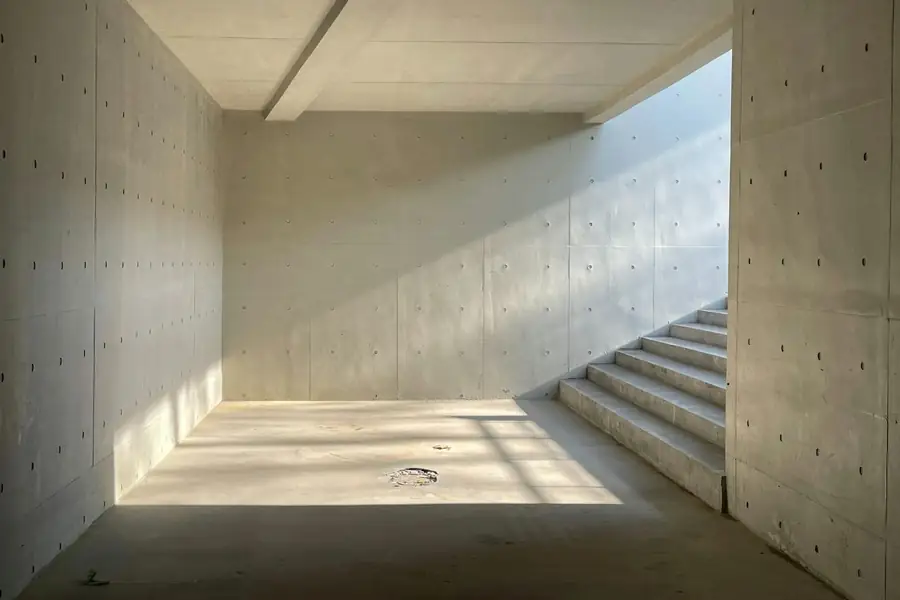
Basement floor coating in Pueblo, CO runs $5 to $8 a square foot installed, which puts a 500 square foot lower level between $2,400 and $3,800 and a full 1,500 square foot basement between $7,100 and $11,300. It is the cheapest permanent finished floor you can put on a basement slab, and unlike carpet, laminate or vinyl plank it does not care if water gets on it.
It is also the application where prep discipline matters most, because a basement slab is the one most likely to be pushing moisture vapor up from below. Pueblo's 12 inches of annual rainfall makes people assume slab moisture is a coastal problem. It is not. What actually drives basement slab moisture here is a combination of older slabs poured without a vapor retarder, landscape irrigation running against the foundation, downspouts discharging too close to the wall, and spring snowmelt saturating clay that then holds water against the concrete because the Denver series soils under most of this county have slow to very slow permeability.
Test the Slab Before Anyone Quotes a Color
Two tests, both cheap, both worth insisting on from any contractor you talk to in Pueblo.
A sealed dish of anhydrous calcium chloride sits on the slab for 60 to 72 hours and is weighed before and after. The result is expressed in pounds of moisture vapor per 1,000 square feet per 24 hours. Standard coating systems generally want to see a low single digit figure.
A probe sits in a drilled hole in the slab and reads the internal RH once it equilibrates. This is the more reliable of the two because it measures the slab's condition at depth rather than what is evaporating off the surface on the day. Most systems want RH below about 80 percent.
Tape a two foot square of clear plastic to the slab, sealed on all four edges, and leave it 24 to 48 hours. Condensation underneath or a visibly darkened patch of concrete means the slab is passing moisture. It proves a problem exists but cannot quantify it, so it is a screening test, not a substitute.
If the numbers come back high, the answer is a moisture tolerant epoxy primer engineered to bond and hold under vapor pressure, not a thicker top coat. Full detail in the Pueblo County slab prep and moisture guide.
What a Coated Basement Actually Fixes
- Concrete dust. A bare slab sheds fine cementitious dust constantly, and in a basement it ends up in the furnace filter and on everything stored down there.
- The damp concrete smell. That smell is moisture moving through open pores. Sealing the surface removes it.
- Cold, dark, unusable space. A light colored coating reflects rather than absorbs the little light a basement gets, which changes how the room reads more than people expect.
- Flooring you cannot risk. Carpet, laminate and glued vinyl are all write offs after one water event. A coating gets mopped and carries on.
- Stains from the water heater, the furnace, the washer and thirty years of storage.
- Radon mitigation and sump work sitting on ugly patched concrete. A coating goes over the patch and unifies the floor.
Finishes That Suit a Pueblo Basement
Basements are the one application where we often steer people away from the flake broadcast that dominates our garage work. A basement is a room, and the finish choice follows what the room is for.
The straightforward choice for a utility basement, laundry area or storage level. Light gray or sand reflects light well. Easy to keep clean, easy to touch up later.
Where the space doubles as a workshop or a home gym. Hides scuffs and dropped weights, adds grip near a laundry sink or water heater.
For a finished lower level being used as a living room, bar or media room. It is the most dramatic option and the most demanding: the slab has to be flat and it has to test dry.
If the slab is in genuinely good condition and you like the look of the concrete itself. Cheapest option, and the only one where slab imperfections stay fully visible.
Basement Coating and a Permit in Pueblo
Coating an existing basement floor is a finish and does not require a permit. The distinction that catches people out is that the Pueblo Regional Building Department does list "finishing a basement" among the interior remodels that need one, and that refers to converting unfinished space into habitable rooms: framing, wiring, egress windows, mechanical work. If your floor coating is one step in that larger project, the project needs a permit and your floor is simply part of it. If you are sealing the slab of a basement that stays unfinished storage, you are not touching structure or systems and nothing is required. The Pueblo County permit guide covers this in detail with the department's own contact details.
Access, Dust and Living Through It
Basements are more disruptive than garages, and it is fair to know that upfront. Grinders and vacuums come down the stairwell, so we protect the stair treads and the door frames. The grinders run with HEPA extraction and we hang plastic at the top of the stairs, but a basement grind is still the noisiest half day your house will have. Coating fumes with modern low odour systems are manageable but real, and we ventilate through a window well or an egress window where one exists. Most people carry on living upstairs without leaving.
Everything has to be off the floor before we arrive, including shelving units, the spare fridge and anything stacked against the walls. We work around a furnace, water heater and sump because they are not going anywhere, and we cut the coating cleanly around their bases.
Doing the garage at the same time usually saves money, because the mobilization, the grinder hire and the crew day are shared. If that is the plan, start with the garage floor coating page, check the ranges on the cost guide, confirm you are inside our service area, then send both through the contact page as one job.