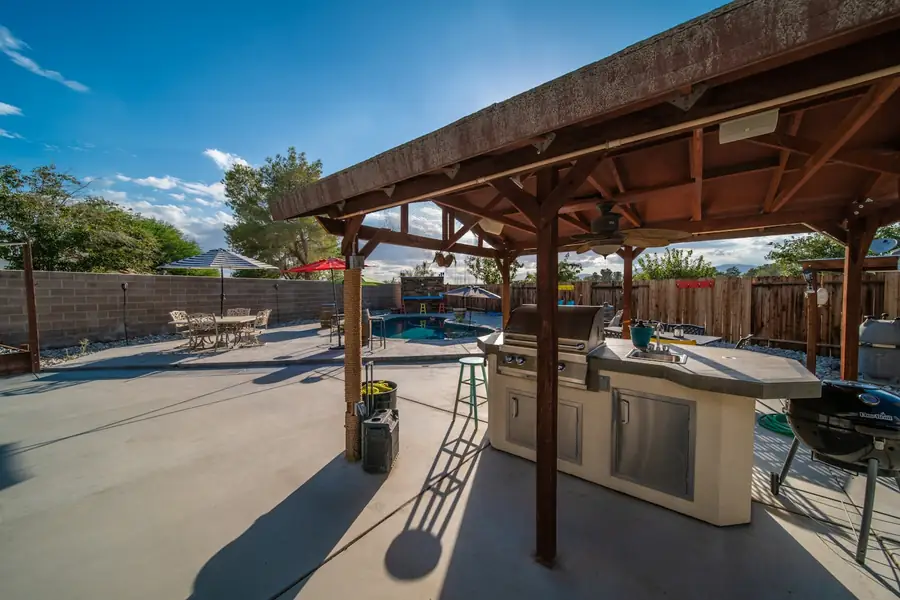
Exterior concrete coating in Pueblo, CO costs about $6 to $10 a square foot installed, above the $5 to $8 you would pay for an interior garage floor. The premium is not margin, it is material and prep: UV stable resin instead of a general purpose one, an aggregate broadcast for wet grip, and a slab that has usually spent twenty years weathering rather than sitting under a car.
It is also the application where we say no most often. A patio slab that has already lost its surface, is spalling in sheets or has heaved along a crack is not a candidate, because a coating seals a problem in rather than fixing it. We would rather tell you that at the estimate than take the job.
What Southern Colorado Does to Outdoor Concrete
Ultraviolet, relentlessly
Pueblo receives roughly 3,470 hours of sunshine a year, about 78 percent of possible daylight, and at 4,692 feet that light is harder than it would be at sea level. Standard epoxy is not a UV stable resin: outdoors it ambers, chalks and eventually powders. Every exterior floor we build uses aliphatic polyaspartic in the wear coats for that reason alone. Details on the polyaspartic coating page.
Freeze thaw, from the inside
Fourteen or more days a year here never climb above freezing, and a great many more nights dip below while the afternoon was in the fifties. Water sitting in the pore network of an unsealed slab expands every time that happens. The visible result is the pitted, sandy surface you see on north facing patios and shaded walkways all over the older parts of town.
Mag chloride on the driveway
A driveway takes the brine directly, both from what melts off the car and from anything spread on the apron. Magnesium ions convert the calcium silicate hydrate in cement paste into a non cementitious magnesium silicate hydrate, and the salt also drives extra water into the pores so the next freeze does more damage. Concrete under a year old is the most vulnerable of all, which is worth knowing if you have just had a new driveway poured.
Clay underneath
The Colorado Geological Survey names cracked and heaved sidewalks, patios and driveways as the classic surface indicator of the expansive clays that underlie populated Colorado, and Pueblo County's dominant soils are exactly that: the USDA Denver series, established from the Pueblo Area survey, smectitic clay carrying more than 35 percent clay well past 40 inches deep with slow permeability. On an exterior slab, where irrigation and roof runoff change the moisture content seasonally, that movement is more active than it is under a garage.
Exterior Surfaces We Coat
The most common exterior job we do in Pueblo. A textured broadcast with a light color, cool underfoot and grippy in a monsoon downpour. Usually a one day install on a typical 300 to 500 square foot slab.
Coarse broadcast, light color to keep surface temperature down, and a resin that shrugs off chlorine. Far better wet grip than bare concrete or an acrylic sealer, and no more scorched feet in July.
The narrow slabs nobody thinks about until they are spalled and uneven. Cheap to do at the same time as a bigger patio job because the mobilization is already paid for.
Full UV stable build with heavy aggregate. Only on a slab that surveys sound. This is the surface most exposed to brine and vehicle load, so the prep standard is highest and the honesty about candidacy is strictest.
Coated with the coarsest texture we use, because a wet coated step is the one place a slick finish is genuinely dangerous. Nosing edges get particular attention.
Common on the acre lots in Pueblo West. Heavy point loading from jacks and tongue weight, so the build thickness goes up and we discuss pad placement before quoting.
When We Will Tell You Not to Coat It
- The slab is spalling in sheets rather than pitting. The surface layer has already debonded and a coating will simply lift with it.
- The crack faces sit at different heights, which means the slab is moving, not just shrinking.
- The concrete was poured within the last 28 days and has not cured, or within the last year and has been salted.
- Water ponds on it after rain and drains toward the house rather than away. Fix the fall first.
- There is an existing acrylic sealer or paint that is failing across most of the area and would need blasting rather than grinding to remove, which changes the economics against replacement.
Timing an Exterior Job in Pueblo
Exteriors are seasonal in a way interior work is not. The slab has to be dry through, above dew point, and free of overnight frost, and we need a clear weather window because a monsoon thunderstorm landing on a green coating ruins it. Practically, that means April through October is prime, with early morning starts through July and August so we are ahead of the afternoon storms. Late autumn is workable on a warm week. Deep winter is not.
Interior work is the opposite: a polyaspartic garage floor coating or a basement floor is happily installed in February. A lot of Pueblo customers book the inside work over winter and the patio for the following spring, which spreads the cost and keeps both jobs in their right season. For commercial exteriors like loading dock aprons, see the commercial epoxy flooring page.
Ranges by surface size are on the Pueblo cost guide, coverage is on the service area page, and you can send measurements and a couple of photos through the contact page to get the survey booked.