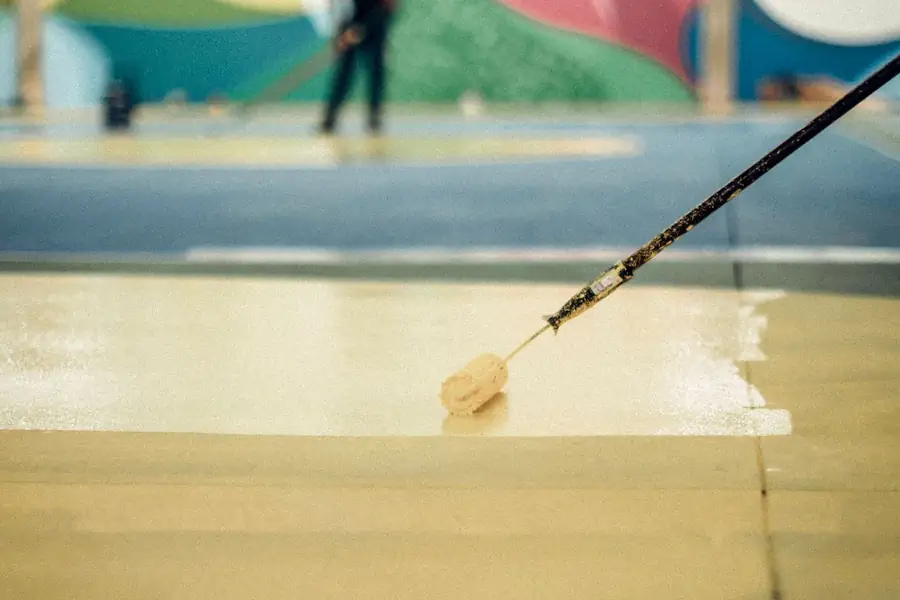
Winter Garage Floor Coating in Pueblo, CO
Winter garage floor coating in Pueblo comes down to one number: the temperature of the slab, not the air. Below about 50 F at the slab most epoxies never fully cure, which rules them out of a cold January garage. Polyaspartic keeps curing where epoxy stops.
Get a Free QuoteYes, a Pueblo garage floor can be coated in winter, but not with every system and not on every day. Pueblo averages 14.4 days a year that never rise above freezing and gets about 28 inches of snow, yet it also has around 3,470 hours of sunshine, so a winter here is a run of cold nights and bright afternoons. A garage slab follows the nights more than the afternoons. That is why the overnight low in the NWS Pueblo forecast tells you more about an install day than the high does.
Winter Garage Floor Coating in Pueblo: What the Cold Changes
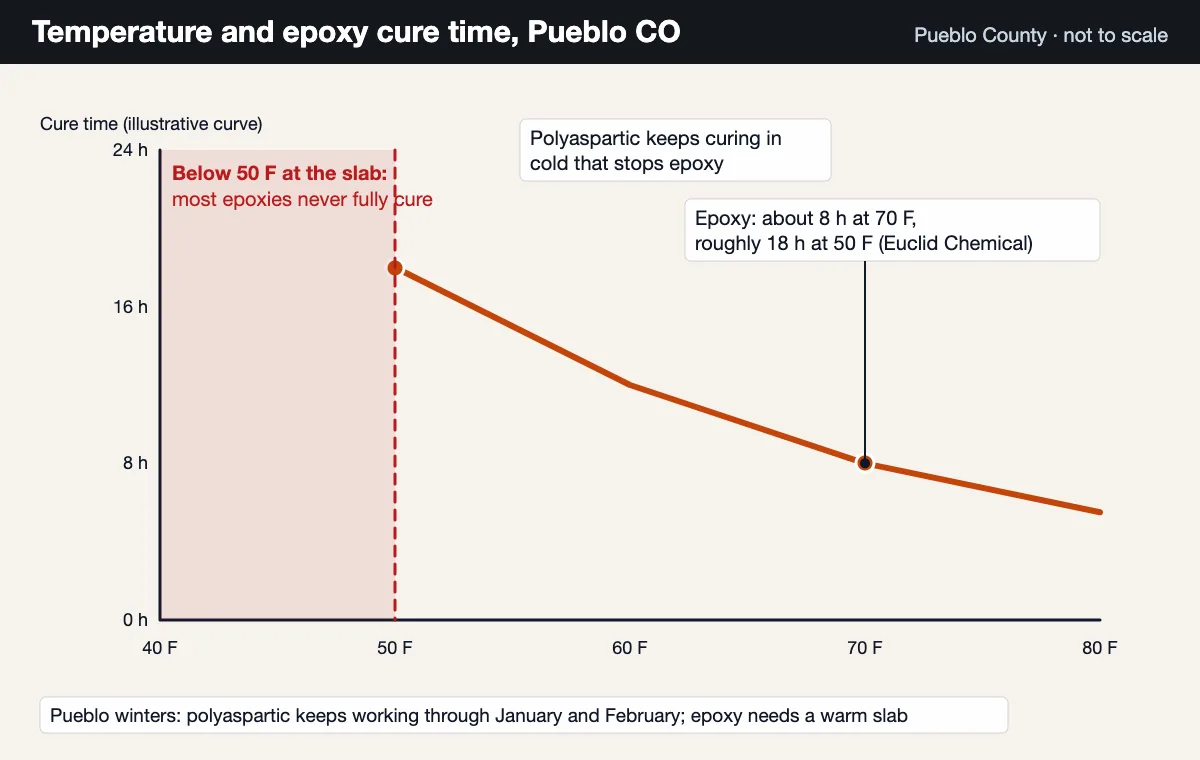
Epoxy cures by a chemical reaction that slows as it gets colder. In Euclid Chemical's published example the same product takes about 8 hours at 70 F and about 18 hours at 50 F, and below roughly 50 F at the slab most epoxies stop short of a full cure. A coat that never fully cures stays soft, scuffs, and lets go under the first hot tire of summer, so the failure shows up months after the install rather than on the day.
Polyaspartic is built for this. It keeps curing at slab temperatures that stall epoxy, which is why a full polyaspartic floor coating is the default for a Pueblo install between November and March. It still has limits, and they are set by the concrete: no frost on the surface, no standing snowmelt, and a surface temperature above the dew point so moisture cannot condense under the coat.
Warm Air Is Not a Warm Slab
A slab poured on clay holds the cold long after the air has warmed. Running a heater for an hour before the crew arrives warms the air, not four inches of concrete, and the gap between the two is where condensation forms. Fuel burning heaters also put water vapor into a closed garage, which is the last thing a fresh coating needs. Two readings matter on a winter morning: the slab surface temperature and the dew point. If the slab is not comfortably above the dew point, the job waits.
Out in Pueblo West, detached shops and pole barns on acre lots are mostly unheated, so they run colder than an attached garage in Belmont that borrows heat from the house. The Pueblo West garage and shop floor page covers those buildings, and the same rule applies: measure the slab, never assume it.
Mag Chloride Season and the Bare Slab
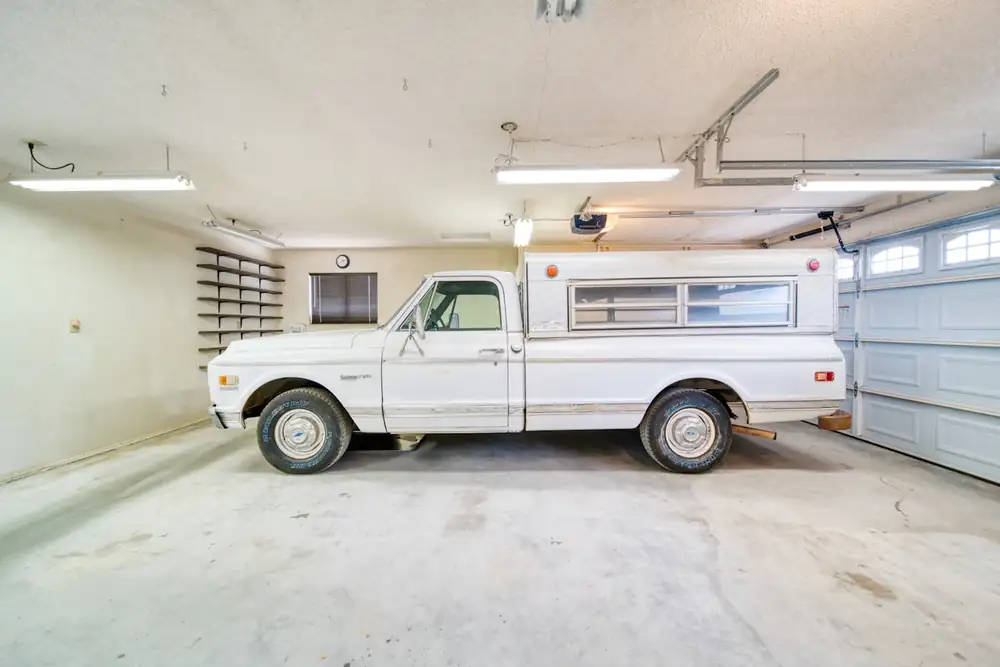
A bare concrete garage slab with wear and staining where the truck parks.
Winter is when the slab takes its damage. Colorado treats I-25 and the local roads with magnesium chloride brine, and it rides home on the tires and drips onto the parking strip. On bare concrete, magnesium ions turn the calcium silicate hydrate that binds cement paste into a magnesium silicate hydrate with no binding strength, and the brine pulls more water into the pores so every freeze does more harm. The Western Transportation Institute found concrete under a year old is the most at risk, which matters if your garage slab was poured this year.
That gives a winter install a real upside: a floor sealed in December keeps the rest of the season's brine off the concrete. It also means the slab has to be cleaned and dried of brine residue before anything goes down, because coating over salt is coating over a bond breaker. The slab prep and moisture guide covers chloride contamination in more depth.
Coat Now or Wait for Spring
Most of the decision comes down to the building, the slab and the finish you want.
| Your situation | System | Winter verdict |
|---|---|---|
| Closed attached garage, dry slab, frost free | Polyaspartic or polyurea base with polyaspartic top | Go ahead. This is the normal winter job. |
| Unheated detached shop or pole barn | Full polyaspartic build | Workable on a dry stretch; take slab readings that morning. |
| You want straight epoxy, or a metallic finish | Epoxy needs a warm slab | Wait for spring, when the slab holds above 50 F. |
| Slab still wet from snowmelt under the door | No system bonds to a wet slab | Dry it out first, or wait. |
| New slab poured this year | Any system, once the concrete is ready | Ask about timing; new concrete is most exposed to mag chloride. |
Pueblo's published installed range, about $5 to $8 a square foot, does not split by season, so a two car garage of about 500 square feet lands between $2,400 and $3,800 in January as in June. The Pueblo epoxy floor cost guide breaks that down by garage size.
An example, not a job record. A 1950s attached two car garage of about 500 square feet, a parking strip pitted from years of mag chloride, and an owner who wants it sealed before February's brine. The slab reads frost free and above the dew point by late morning, so it gets a polyurea base and a polyaspartic top instead of epoxy. The pitted strip needs patching and grinding flush, which puts the job toward the top of the $2,400 to $3,800 two car range. What goes wrong on jobs like this: starting at dawn on a slab that has not reached temperature, or coating over brine residue that was never rinsed out.
Sources
About 28.3 inches of snow a year, an average of 14.4 days that stay below freezing, a record low of -31 F on February 1, 1951, and roughly 3,470 hours of sunshine.
Magnesium chloride converts the calcium silicate hydrate binding cement paste into a non cementitious magnesium silicate hydrate and raises water uptake into the pores. Concrete under one year old is at the greatest risk.
Local forecasts and overnight lows. The overnight low, not the afternoon high, is the number that matters for a garage slab.
Ready to price it? The garage floor coating in Pueblo page covers the full system and prep, and the epoxy flooring in Pueblo overview covers basements, shops and patios too.
Winter Garage Floor Coating in Pueblo: Frequently Asked Questions
Can you epoxy a garage floor in winter in Pueblo?
Not well with straight epoxy in an unheated garage. Epoxy cure slows sharply as the slab cools: Euclid Chemical's published example runs about 8 hours at 70 F and about 18 hours at 50 F, and below roughly 50 F at the slab most epoxies never reach a full cure. A Pueblo garage slab in January often sits below that line for days. A polyaspartic system is the winter answer, because it keeps curing at slab temperatures where epoxy stalls.
Can you apply polyaspartic in cold weather?
Yes, which is the main reason it gets specified for Pueblo installs between November and March. The limits are the slab, not the chemistry: the concrete has to be free of frost and standing moisture, and its surface has to sit above the dew point so condensation cannot form under the coat. Those two readings get taken on the morning of the job, not assumed from the forecast.
Does road salt damage an epoxy garage floor?
A sound, fully cured coating keeps magnesium chloride brine off the concrete, which is its job. The damage happens where the brine reaches bare concrete: through a worn or peeled patch, at an uncoated door line, or on a slab that was never coated. That is why a coating that lifted in its first summer is worse than it looks in its first winter: every gap lets brine onto the slab.
Should I wait until spring to coat my garage?
Wait if you want straight epoxy, if the garage holds snowmelt that never dries out, or if the slab is a new pour from this year. Go ahead in winter with polyaspartic if the garage can be kept closed and dry for the install, the slab reads above the dew point and frost free, and you would rather the floor was sealed before the worst of the brine season.
How long before I can park on a floor coated in winter?
Longer than in summer. The usual range is 24 to 72 hours for vehicles depending on the system and the slab temperature, and a cold slab sits at the long end of that. Ask for the vehicle return time for your floor at the temperature it was installed at, and keep the car out until then even if the surface feels hard.
Get the floor sealed before the next storm
Tell us the garage size and whether it is heated, and get a free written quote across Pueblo and Pueblo West.